UAE Flag
+971 58 539 7665
Singapore flag
+65 9616 5641
Indian flag
+91 80560 56674
Colour Logo of Fortius Consulting Services

Fortius Blog

All You Need To Know About Internal Audits
January 25, 2023
Fortius Team
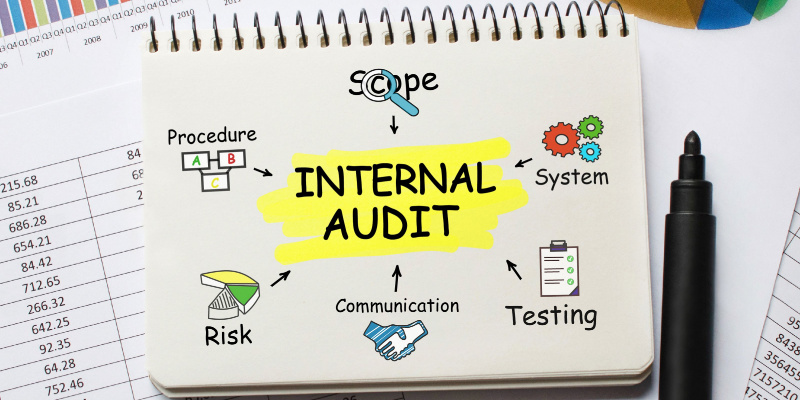
A notebook with drawings about Internal Audit.
In the current business climate, internal audits have become significantly important. Ensuring optimum business processes and compliances is simply impossible without high-quality internal auditing mechanisms in place. Leading business advisory services such as Fortius provide businesses with qualified and experienced auditors for this purpose. Internal auditors assess risk management practices, governance, and internal control processes. This helps the company anticipate and identify probable issues of all kinds, be it compliance, business processes, or even organisational control. The Basics of Internal Auditing Internal auditing, an independent management function, continuously evaluates an organisation's operations. By means of this assessment, it improves a company's processes, ultimately helping businesses reach organisational goals. Businesses in the UAE often employ auditing firms. However, separate internal audit departments within a company or organisation are also quite common. The Importance of Internal Auditing The purpose of such audits is, in a nutshell, to ensure that management's internal control mechanisms are functioning as intended. Management's strategy, processes, and tools for achieving the company's stated mission and objectives are all part of the internal control system—also known as administrative controls. Examples of internal controls are: Processes: for setting up and managing daily business activities. Systems: Metrics, reports, and constant monitoring are all made possible by systems. Actions: Measures taken by management to improve risk management and boost the prospect of reaching predetermined objectives. Why Do You Need Internal Audits? Internal auditing is performed for the purpose of assessing the effectiveness of an organisation's internal processes and making appropriate recommendations for enhancement thereof. The following tasks will be carried out by internal audit services as part of an internal audit of your company. Check that all the numbers add up and that the accounting and statistics are legitimate. Make sure that all purchases and sales of assets are authorised. Help in finding and stopping fraud. Verify that the obligations have been incurred solely for business purposes. Verify that all estimates and accounting policies are reasonable. Make sure there are sufficient internal controls. Evaluate the effectiveness of the entire system of internal controls. Types of Internal Audits The best auditing firms conduct inspections in a number of different internal auditing fields: Increasing the effectiveness of the corporation and its operations. Maintain accuracy in all forms of reporting- financial, tax, and management. Assurance that assets will be safe. Adherence and compliance with rules and laws. Each of the guidelines covers a wide swath of activity and aims to accomplish accurate conclusions about whether or not the data submitted satisfies the needs. It also ensures that the business is complying with all laws and requirements, providing accurate data, and poses no threat to the business. Internal Audits to Ensure Efficiency of Controls Internal audits have multiple functions in ensuring efficient internal control. Some of the primary ways in which this is achieved include: To help management focus its audit efforts, you must first conduct a risk assessment. Evaluation of controls can be useful for pinpointing areas where insufficient safeguards and procedures have been implemented. Having a thorough understanding of the insurance industry's methods and procedures, especially those involving the information technology (IT) systems used for processing high volumes of data, like claims and policyholder information, can be attained through thorough process walkthroughs and thorough documentation. Prove the controls are performing as expected by testing them. Reporting that includes findings and suggestions for bettering processes and controls. Now, let's take a look at why it's a good idea to conduct internal audits at your company and what benefits you can expect from doing so. Also Read: Auditing in the UAE- All The Crucial Factors Benefits of Conducting Internal Audits Internal audits are evaluations performed within a company to prove the efficacy of its processes and underlying operating systems. An organisation's processes and control environment can always be better, and that's why internal auditing is so crucial to any successful business. Let us take a look at the various benefits of internal audits. Enhanced Internal Controls Internal controls that effectively supervise, monitor, prevent, detect, and rectify irregular transactions, monitor operational efficiency, and maintain sufficient documentation are essential to the successful execution of business processes and procedures and the achievement of the associated goals. Reduced Accounting Errors Decrease the probability of material misstatement in the financial statements of the company. A company cannot produce trustworthy financial statements without some form of internal control or audit. Decreased Possibility of Fraud Internal auditing's primary function is to safeguard an organisation by identifying and eliminating instances of fraud and theft. By uncovering fraud, inefficiency, noncompliance with laws, and other unforeseen conditions like theft, an internal audit can protect a company from financial loss. Maximised Operational Efficiency To maximise productivity, businesses should perform regular, impartial audits of their policies and procedures to make sure they are being carried out as intended. As a result, the company can rest easy knowing that its guidelines are actually being followed. It gets rid of the potential problems that were anticipated. Optimised Compliances The internal audit function is responsible for ensuring that the company complies with all applicable laws, rules, and other legal regulations. Improved Resource Allocation Internal Audits ensure that available resources are being put to good use. The Internal Auditor stresses the efficient use of available resources. One way to determine how efficiently a business is using its resources is to monitor its output costs. Increased Reliability of Operations Improves dependability and continuity of operations through assistance from an internal audit in locating weaknesses in business plans and providing guidance on improving recovery procedures and contingencies. It's a great tool for fostering reliable relationships with clients, workers, and vendors. Streamlined Decision Making Benefits decision-making by providing an outsider's perspective on the company after the managers have been kept out of the audit and all the relevant data has been collected. Ultimately, this aids the company's upper management in making smarter choices for the future. External Audit Vis-a-vis Internal Audit The purpose of an external audit is to provide an independent opinion on
Read More
UAE Corporate Taxes: Elements, Rate Calculation & Exemptions
January 10, 2023
Fortius Team
The UAE government’s announcement to implement corporate taxes from June 1, 2023, has aroused interest and curiosity in the country’s business world and among corporate tax consultants. Our article explores all the major and minor details of corporate taxes in the UAE. If you own a business in the UAE, you should pay attention to the nuances and intricacies of the UAE's corporate taxes. UAE Corporate Taxes: Let’s Understand Them Better Corporate Tax is otherwise known as Business Profits Tax or Corporate Income Tax. As the name suggests, it is a tax imposed on the total profit of a business or company based in the UAE. By implementing the corporate tax, the UAE government hopes to accomplish three goals: Strengthen UAE’s credibility as a major business hub. Prevent tax-related frauds and unwanted tax practices. Meet international requirements regarding transparency in taxation. Keeping these objectives in mind, the government has formulated corporate tax laws with several key elements, which we have listed below for your reference. Corporate Tax Rate You should be aware of the corporate tax rate in the UAE if you are liable to pay it. 9% for taxable income over AED 375,000 0% for taxable income up to AED 375,000 The government sets all UAE corporate tax rates. An OECD Base Erosion and Profit Shifting project, 'Pillar Two', specifies a different corporate tax rate for multinationals that meet certain criteria. 10 Prime Elements of Corporate Taxes in the UAE : A Quick Glance According to the laws of the United Arab Emirates government, the following elements comprise the core of its newly announced Corporate Taxes: 1. Corporate taxes are not applicable for foreign investors not involved in businesses in the UAE. 2. Qualified intra-group transactions and reorganisations will not be subject to corporate tax. 3. Businesses operating in free zones are still eligible for corporate tax benefits if they follow the rules. 4. A UAE-based business's capital gains and dividends from its related shareholdings will not be subject to corporate tax. 5. Businesses are subject to corporate tax on their adjusted accounting net profits. 6. International and domestic payments are not subject to withholding tax. 7. Emirate-level corporate taxation applies to resource exploitation. 8. Businesses can offset their corporate tax liability using foreign tax credits. 9. Companies can take advantage of loss transfer and utilisation laws. 10. Corporate tax is not applicable for those deriving income from: Real estate Stock investments Income from jobs Income from sources without connection to business activities in the UAE How to Accurately Calculate Corporate Tax What are the particulars that should be considered when calculating corporate tax? Well, calculating corporate tax after adjusting accounting profits will look like this: Particulars Amount (AED) Net Profit/loss as per the financial statement xx Add/Less: Adjustments as per the CT legislations xx Taxable Income Taxable Income up to AED 375,000 @0% (A) Taxable Income above AED 375,000 @9% (B) CT Liability A + B Less: Foreign Tax Credit xx CT Payable xx Among the most common questions business owners ask is, “Is my business subject to corporate tax in the UAE?” Since tax compliance is mandatory in the UAE, and corporate tax is levied at 9%, it is only natural to ask this question. Let’s explore these details. The Detailed List of Exemptions from UAE Corporate Tax In the UAE, corporate tax applies to all incomes earned with a commercial license. However, natural resource extraction businesses will be subject to Emirate-level corporate taxes instead of UAE Corporate Tax. We have listed below both individual and corporate exemptions from the UAE's 9% corporate income tax that will go into effect on 1 June 2023: 1. UAE-based individuals deriving income from: Employment. Freelancing income from professional, business, commercial and economic activities is permitted with a business license. Real estate investments made personally and not as a business. Any business or commercial activity for which the UAE law does not require a license or permit. Dividends, capital gains, and income earned from investments in stocks and bonds. Income and interest earned from savings and deposit accounts. Also Read: All You Need To Know About Internal Audits 2. For UAE-registered businesses Large-scale MNCs that meet specific requirements will have to pay higher corporate taxes, which are yet to be communicated by the government. Companies with registered income that does not exceed AED 375,000. UAE-based businesses earning capital gains and dividends from shareholdings. Companies registered in the free zone that comply with all regulations and do not conduct business with mainland UAE firms. ( These companies are also exempt from income taxes.) 3. Free Zone Companies Despite confusion about how the government plans to tax companies operating in the free zone, early reports have good news for them. To recognise the contribution of the free zone-based companies to the UAE economy, the new corporate tax regime will continue honouring free zone incentives. Hence, companies operating in the free zone that do not do business with mainland UAE companies will still have an advantage over those operating in non-free zones. 4. Offshore Companies Corporate tax consultants in the UAE are unclear whether offshore companies are subject to corporate tax. According to UAE's business advisory grapevine, offshore firms will follow the same rules as free zone businesses. Additionally, the requirements for audited financial statements from foreign companies may also differ. How UAE Corporate Tax Impacts Expense & Loss for Companies UAE-based companies that incur tax losses can now deduct these losses from future taxable income under the newly proposed UAE corporate tax regime. While the law allows the company to carry forward losses indefinitely, the loss itself cannot exceed 75% of taxable income. To qualify for this benefit, the company must maintain 50% of its shareholdings during the period in which losses are incurred until the end of that period. Additionally, several expenses are not deductible under the UAE's corporate tax regime. They are: Donations made to charitable organisations or public benefit bodies that are not recognised by the UAE government. Administrative
Read More
Effective Risk Management: The Need of the Hour
January 5, 2023
Fortius Team
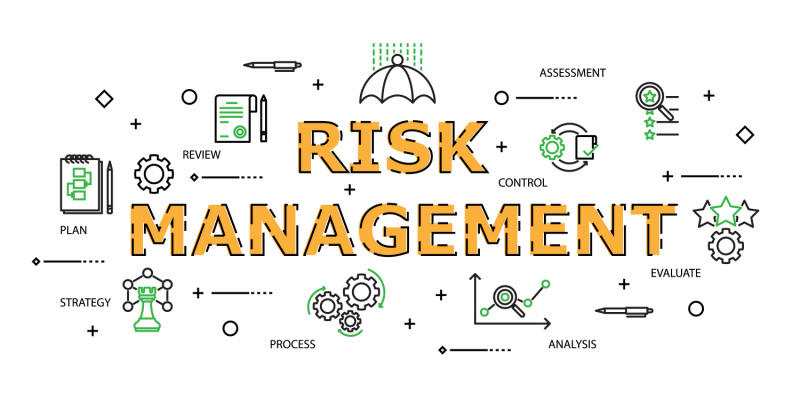
A vector with a set of icons illustrating the concept of Risk Management with words related to the same.
“You can’t get anywhere in life without taking any risks.” - Esmee Bianco. What is a risk? In simple terms, risk is anything that affects a business's operations. It can be an event, an unexpected circumstance, or a decision taken by employers or employees. As with life, risks are inevitable in business. Big or small, risks are an intrinsic part of every stage of the business. Some risks are reasonable, and they turn out to be beneficial for your company. Other risks, however, could pose a significant threat and threaten organisational stability, affecting everyone in the long run. This is where risk management comes into play. Businesses must try to identify the risks they are exposed to in advance and prepare for them. How Does Risk Management Work in Businesses? Risk Management in business has three prime objectives: Identify and analyse the risk factors. Control the risk factors with immediate effect. Protect the organisation from unexpected loss and other threats. > Moreover, these objectives encompass everything risk management entails. Besides, with most risks being unpredictable in terms of type and degree, effective leadership can reduce their chances of occurring and their consequences. Every step and strategy in risk management is an art and science because of the wildly unpredictable nature of business risks. Risk managers have their work cut out for them in terms of identifying risks, assessing them, and finding solutions to prevent them. Generally, there are four types of risks that businesses face. 1. Financial risks All businesses take financial risks daily when dealing with loans, product pricing and distribution, inventory purchase, etc. Mergers and acquisitions are bigger financial risks. Financial risks keep a company running; hence, they are ‘necessary evils.” 2. Operational risks The day-to-day work of running a business is full of unexpected events. There is always the possibility of your computer system failing, your employees making significant mistakes, and cyber criminals gaining access to your data. These risks can bring your business to a temporary standstill causing a major loss of revenue. 3. Strategic risks Poor business decisions, inaccurate forecasts, inadequate cash flow, and changes in the economy are all examples of strategic risks that managers need to be aware of. 4. Hazards Hazards comprise anything that could hurt your employees or damage your business property. These risks are higher in places that deal with chemicals and heavy machinery. However, even the smallest electrical short circuit in an office and natural disasters can cause massive damage. In short, all risks that are not within the control of the workplace environment can be categorised as hazards. These above-mentioned risks can have disastrous effects. Natural disasters like earthquakes or tsunamis can completely wipe out the business forever. Cyber threats like ransomware and data breaches can cripple the company, forcing it to shut down permanently. Yes, risks are scary. Also Read: Benefit of Outsourcing Accounting Services in Dubai 10 Reasons Why Risk Management Is A Must The omnipresent possibility of risks increases the need for effective risk management. Making it an essential component of your organisation is a wise decision because it: Helps you arrive at better decisions concerning workplace safety, financial security, and regulatory compliance. Gives you clarity about risky business strategies and their outcomes and clears you of pitfalls. Keeps you away from legal liabilities, property or monetary losses, and collateral damage. Demonstrates your company’s social responsibility by implementing eco-friendly mitigation plans. Protects your reputation and image, keeps your staff safe from potential harm and increases awareness about avoiding risks. Ensures compliance with safety rules eliminates unnecessary costs and protects your company against all risks. Steers your business away from potential threats that can cause loss of revenue, time, and customers. Keeps your workplace and its environment safe from harmful incidents and accidents. Ensures a safe and reliable workplace for all your employees and outsiders involved in your business. Protects all business resources that keep your business running, such as your finance, manpower, equipment, etc. So, what does risk management do? Let’s explore this further. 5 Steps to Implementing Good Risk Management In general, various types of risks require different approaches to risk management; however, each process follows the same steps: Step 1 Identifying the existing risks by reviewing the sources and ranking them according to their priority. Gathering this crucial information may require some intense brainstorming sessions with your team heads in this first step. Step 2 The next step is assessing the amount of damage the risk may cause your organisation. This step is where you ensure that the risks do not thwart your business goals and objectives. Step 3 Formulating response strategies if and when the risk occurs despite all preventive measures. Here’s where you develop contingency plans and security measures to protect your workforce and properties from the danger. Step 4 Focusing on creating risk prevention strategies and mechanisms to avoid any risks in the future. You can derive vital information from strategy already in place to handle existing risks. Step 5 Tracking and monitoring new and existing risks are integral to the mitigation plan. It is also essential to periodically review and adjust the overall risk management process to stay current and ready. Why UAE-Based Businesses Should Consider Risk Management Services Does your business operate in the UAE? In case you haven't already taken steps towards risk management, it's time to do so. Unsurprisingly, new companies are proliferating in the UAE as the country presents a conducive environment for investors. There is also an increase in the risks that these entities face, which reinforces the need for risk management services in the UAE because these services do the following for you: Evaluate existing risks and your financial capability to implement risk management procedures. Enhance and update your existing risk management strategies and procedures to meet your company’s expectations. Stay aligned with unexpected regulatory changes and ensure timely compliance with UAE laws. Devise a robust compliance program that provides you to not spend unnecessarily on compliance costs. Whether you are deep-rooted
Read More
Fortius Consulting Services is a trusted name for business consulting and CFO services in the UAE, Singapore and India. Through our expert consulting and advisory services,we assist organisations across the UAE & Asia to boost their profitability, improve operational effectiveness, increase management capability, institutionalise strategies, and upgrade their internal structures.
TALK TO AN EXPERT

SERVICES

CFO Services
Tax Planning
Business Advisory
Management Consultancy
Financial Reporting & Compliance 
Cashflow Management
Mergers & Acqusition (M&A) Advisory

CONTACT

Email Us

info@fortius.consulting

Call Us

UAE  +971 58 539 7665   

SINGAPORE  +65 9616 5641 

INDIA  +91 80560 56674

envelopephone-handsetcrossmenuchevron-down