UAE Flag
+971 58 539 7665
Singapore flag
+65 9616 5641
Indian flag
+91 80560 56674
Colour Logo of Fortius Consulting Services

Fortius Blog

Effective Risk Management: The Need of the Hour
January 5, 2023
Fortius Team
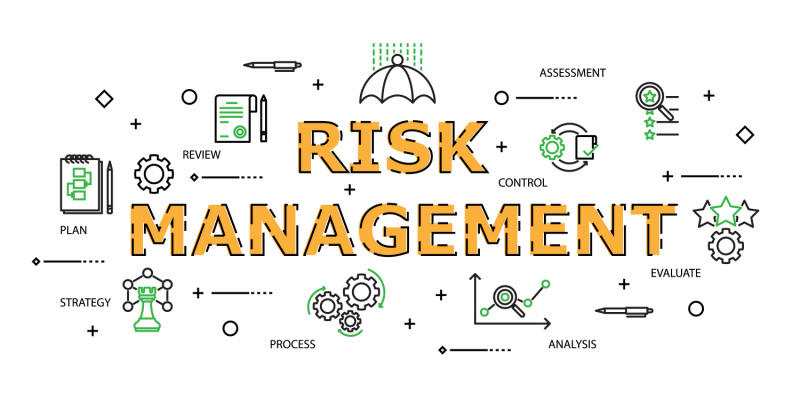
A vector with a set of icons illustrating the concept of Risk Management with words related to the same.
“You can’t get anywhere in life without taking any risks.” - Esmee Bianco. What is a risk? In simple terms, risk is anything that affects a business's operations. It can be an event, an unexpected circumstance, or a decision taken by employers or employees. As with life, risks are inevitable in business. Big or small, risks are an intrinsic part of every stage of the business. Some risks are reasonable, and they turn out to be beneficial for your company. Other risks, however, could pose a significant threat and threaten organisational stability, affecting everyone in the long run. This is where risk management comes into play. Businesses must try to identify the risks they are exposed to in advance and prepare for them. How Does Risk Management Work in Businesses? Risk Management in business has three prime objectives: Identify and analyse the risk factors. Control the risk factors with immediate effect. Protect the organisation from unexpected loss and other threats. > Moreover, these objectives encompass everything risk management entails. Besides, with most risks being unpredictable in terms of type and degree, effective leadership can reduce their chances of occurring and their consequences. Every step and strategy in risk management is an art and science because of the wildly unpredictable nature of business risks. Risk managers have their work cut out for them in terms of identifying risks, assessing them, and finding solutions to prevent them. Generally, there are four types of risks that businesses face. 1. Financial risks All businesses take financial risks daily when dealing with loans, product pricing and distribution, inventory purchase, etc. Mergers and acquisitions are bigger financial risks. Financial risks keep a company running; hence, they are ‘necessary evils.” 2. Operational risks The day-to-day work of running a business is full of unexpected events. There is always the possibility of your computer system failing, your employees making significant mistakes, and cyber criminals gaining access to your data. These risks can bring your business to a temporary standstill causing a major loss of revenue. 3. Strategic risks Poor business decisions, inaccurate forecasts, inadequate cash flow, and changes in the economy are all examples of strategic risks that managers need to be aware of. 4. Hazards Hazards comprise anything that could hurt your employees or damage your business property. These risks are higher in places that deal with chemicals and heavy machinery. However, even the smallest electrical short circuit in an office and natural disasters can cause massive damage. In short, all risks that are not within the control of the workplace environment can be categorised as hazards. These above-mentioned risks can have disastrous effects. Natural disasters like earthquakes or tsunamis can completely wipe out the business forever. Cyber threats like ransomware and data breaches can cripple the company, forcing it to shut down permanently. Yes, risks are scary. Also Read: Benefit of Outsourcing Accounting Services in Dubai 10 Reasons Why Risk Management Is A Must The omnipresent possibility of risks increases the need for effective risk management. Making it an essential component of your organisation is a wise decision because it: Helps you arrive at better decisions concerning workplace safety, financial security, and regulatory compliance. Gives you clarity about risky business strategies and their outcomes and clears you of pitfalls. Keeps you away from legal liabilities, property or monetary losses, and collateral damage. Demonstrates your company’s social responsibility by implementing eco-friendly mitigation plans. Protects your reputation and image, keeps your staff safe from potential harm and increases awareness about avoiding risks. Ensures compliance with safety rules eliminates unnecessary costs and protects your company against all risks. Steers your business away from potential threats that can cause loss of revenue, time, and customers. Keeps your workplace and its environment safe from harmful incidents and accidents. Ensures a safe and reliable workplace for all your employees and outsiders involved in your business. Protects all business resources that keep your business running, such as your finance, manpower, equipment, etc. So, what does risk management do? Let’s explore this further. 5 Steps to Implementing Good Risk Management In general, various types of risks require different approaches to risk management; however, each process follows the same steps: Step 1 Identifying the existing risks by reviewing the sources and ranking them according to their priority. Gathering this crucial information may require some intense brainstorming sessions with your team heads in this first step. Step 2 The next step is assessing the amount of damage the risk may cause your organisation. This step is where you ensure that the risks do not thwart your business goals and objectives. Step 3 Formulating response strategies if and when the risk occurs despite all preventive measures. Here’s where you develop contingency plans and security measures to protect your workforce and properties from the danger. Step 4 Focusing on creating risk prevention strategies and mechanisms to avoid any risks in the future. You can derive vital information from strategy already in place to handle existing risks. Step 5 Tracking and monitoring new and existing risks are integral to the mitigation plan. It is also essential to periodically review and adjust the overall risk management process to stay current and ready. Why UAE-Based Businesses Should Consider Risk Management Services Does your business operate in the UAE? In case you haven't already taken steps towards risk management, it's time to do so. Unsurprisingly, new companies are proliferating in the UAE as the country presents a conducive environment for investors. There is also an increase in the risks that these entities face, which reinforces the need for risk management services in the UAE because these services do the following for you: Evaluate existing risks and your financial capability to implement risk management procedures. Enhance and update your existing risk management strategies and procedures to meet your company’s expectations. Stay aligned with unexpected regulatory changes and ensure timely compliance with UAE laws. Devise a robust compliance program that provides you to not spend unnecessarily on compliance costs. Whether you are deep-rooted
Read More
Advantages of Outsourcing Accounting Services in Dubai
December 25, 2022
Fortius Team
With a background of business people using laptops, the graphic features a business concept emblem in the foreground.
How Do Startups And Entrepreneurs In Dubai Benefit From Outsourcing Accounting Services? Business leaders from around the world consider Dubai to be one of the most advantageous places to start a new business. The opportunities here are infinite with individuals from all over the globe and a thriving economy. You would want everything, from planning your logistics to establishing your physical (or virtual) storefront, to be flawless. Although it's easy to get caught up in the action, it's essential to take time out to plan out the business's finances and accounting. A healthy startup cannot function without accurate accounting and bookkeeping. However, as a self-made entrepreneur, it may be quite difficult to manage your company's finances, particularly in the beginning. Even when you have achieved some level of success, the continued management of your company's finances will add a new level of complexity to the process of operating the firm, which will, in turn, take time away from activities that generate money. Numerous advantages await your company when you outsource your accounting needs in Dubai. Through these services, your business may get professional help for time-taking tasks and processes including bookkeeping, financial planning, back office support, reconciliation, payroll processing, and many other accounting-related chores that are specialised to your sector. In this article, we will take a short look at the many types of outsourced CFO accounting services available in the UAE, as well as the best times to use them. Which financial and commercial duties can be outsourced? Any business, no matter how big or small, may benefit from hiring an external accounting firm to maintain orderly financial records and accurately document financial activities. The top financial responsibilities that are outsourced are listed below: Managing the accounts payable and receivable Accounts payable (AP) and accounts receivable (AR) outsourcing optimise cash flow and guarantee on-time payments. Small or new enterprises that lack a dedicated finance staff to manage all the obligations can use this service. Your team may be complemented by an external accounting company, which could offer the following services: Approval and storage of invoices Online transactions Processing of checks Order control Billing and payments for clients Cost reporting Responding to vendor questions Management of collections and debt Financial planning Developing A Financial Plan In order to assess the health of their company and direct their decision-making, organisations require operational analysis and monitoring. In large and more established firms, the CFO is often in charge of several of these duties. However, not every startup or newly emerging company has the resources to engage a full-time CFO. Financial planning services are available to smaller businesses by outsourcing CFO services for startups. And these services can be well availed within the budgetary limits. Services provided by an outsourced CFO might be: Providing reports on the collection, analysis, and prediction of financial data Estimating costs and income Advicing on personnel and funding possibilities Discussing with investors Budgeting and planning Creating profitable business prospects Accounting Services Hiring a third party to handle bookkeeping means you can rely on a group of experts to keep your financial records in order and safe from prying eyes. They can assist you in removing errors, typos, omissions, and oversights from your financial paperwork while keeping your financial records correct and up-to-date. Services for outsourced bookkeeping include: Managing employee expenses Adjusting ledgers Consolidating several entities and multiple currencies Administration of the order to cash Handling of e-payments and procurement Managing subscription/maintenance renewals Managing time and expenses Processing and payment of invoices Setting up of accounting and bookkeeping software Filing and Submission of Tax Returns Accounting knowledge is necessary if you want your company to comply with all tax rules, which is a must. Hiring a third-party accounting firm can help you stay compliant while reducing the risk of making mistakes that might harm your business. Companies outsourcing tax filing services do a number of things to improve the way businesses handle their taxes, such as: Assist with tax collection, filing, transferring funds, and staying in line with tax rules Franchise tax support Assist with Payroll tax– its collection, filing as well as payment Tax planning, to help a company pay less in taxes and reduce its risks Verification of statements for compliance Handling Payroll When a business outsources its payroll processing, it automates the process, resulting in increased efficiency and dependability. There are a lot of outsourced accounting companies that use payroll software to keep costs down. Errors in processing payments or filing tax returns are less likely to occur, thanks to technological advancements, which means your business will pay less fines. With payroll outsourcing, you may expect accurate and quick data, along with the following benefits: Processing of payroll that may, if necessary, be linked to an existing accounting package Filing of payroll taxes Access on-the-go, from any device, self-service for employees Paying workers in a variety of ways, such as by bank transfer and payment cards Processing at year's end, including W-2, and Tax and Wage Statement. Legal procedures for wage garnishment Payroll and individualised reporting Keeping tabs on staff members Notification of new hires Easily accessible customer service Preparing reports or financial statements By outsourcing your accounting, you may access a group of knowledgeable CPAs who can provide the financial records your company requires for both internal and external reporting. The outsourced service aids in: Tracking Cash flow by combining your income and expenditure into financial statements. Bringing in investors, increase public awareness, and guarantee growth. Using detailed reports to inform executives and members of the board about financial performance, enabling management to make adjustments for sustained success. Addressing cash flow concerns and foresee potential challenges in the future. Regulatory Services Your company will benefit from more financial monitoring and an in-depth review of its cash flow when you hire controller services. The greatest users of this service are established and expanding businesses that need more strategic direction and insights to foster their development. Controller services that are outsourced assist in: Reporting on audits
Read More
How Does VAT Registration Benefit Your Business?
December 20, 2022
Fortius Team
A person calculating taxes using a calculator
Registering for VAT is not a mandatory requirement under any law for many small businesses in the UAE. Yet, it has several benefits. In case you have not yet registered for VAT, you should seriously consider getting it done. It is a prudent choice to avail the VAT registration services of Fortius Consulting Services in the UAE because of the skilful insights and experience of its professionals. Also, the UAE is among the few and first members of the Gulf Cooperation Council to start indirect taxes on various services & products. So, the legislators of the UAE are definitely aiming toward creating seamless taxation methods across the country. By registering for VAT, you will be aiding in smooth and accurate tax collection by the government. The Concept of VAT and Its Implications The legal effect of registering for VAT is that your business becomes statutorily authorised to collect VAT on the goods you sell or the services you offer. So, if your services or goods come under the purview of taxable products, you must charge VAT on them from your clients or customers. The VAT collected should then be remitted to the UAE government. As a business registered under VAT, you will also have the opportunity to claim ITC (Input Tax Credit) on the purchases. The ITC claimed by you will later be adjusted against your liabilities. Your business will also have to comply with the existing tax norms and file the returns annually or quarterly, as the case may be. All VAT-registered companies must keep accurate and up-to-date accounting records, tax payment documents such as tax invoices, credit notes, debit notes, and records of all inward and outward supplies. Knowing VAT basics is an essential step in preparing for VAT, and registering for VAT is always the initial step in transitioning your company toward the VAT era. As a business registered for VAT, the government offers financial advantages, unlike unregistered UAE businesses. VAT Registration in the UAE– The Types There are several kinds of VAT registration services in Dubai. These are based on your total profits, revenue, and taxable income. Free VAT Registration Businesses with at least AED 187,500-375,000 in annual revenue are eligible for voluntary VAT services. If your business's turnover qualifies, you can obtain a consensual VAT registration and TRN number. Mandatory VAT Registration VAT registration is required for companies with annual sales over AED 375,000. To function properly in UAE, you'll need a Tax Registration Number. Once you obtain a TRN number, your company can charge VAT on your goods and services. UAE VAT Registration Benefits Not all companies must register for VAT. Businesses with a certain annual revenue must register for VAT. While you can consensually register for VAT, let's look at the perks. To be VAT-registered has some benefits for small businesses. Let us take a look at these benefits in greater detail. The company can get VAT refunds. If your business is VAT-registered with the FTA, you can claim the VAT back at the end of each fiscal year. Voluntary VAT registration allows businesses to obtain VAT refunds for the preceding six months. If you've been in business for six months but haven't reached the threshold, you can reclaim VAT if you keep invoices and records. The Company can go ahead with Input tax deductions Input VAT is paid on purchases, and output VAT is collected on sales. The business can deduct input VAT from output VAT, reducing its VAT liability. Only VAT-registered businesses can claim input tax. Otherwise, the overall VAT paid for purchases is a cost incurred by your company. The company can compete with industry leaders. Startup entrepreneurs want their businesses to expand and succeed. Often, the best way to build a steady, loyal clientele is to appear larger and more capable than the major players. Your startup will thrive with UAE VAT registration. New small companies that haven't registered for VAT will have a disadvantage. The company can expand. Most businesses, especially established ones, won't collaborate with a startup if it's not UAE VAT-registered. A business that can't properly invoice, loses customers. This is bad for small businesses. It's ideal to get VAT-registered, so clients know they're dealing with a reputable company. The company need not worry about hitting the VAT threshold. Many smaller companies surpass the VAT threshold without even being aware. Unregistered businesses can get in a significant amount of trouble once the FTA uncovers the truth. Voluntary VAT registration eliminates the risk of an FTA fine or penalty due to oversight. The Company gets tax IDs (TRN) The TRN provided after VAT registration gives customers and clients confidence in a small business. The TRN on every invoice portrays a successful business because most people understand VAT registration requires passing a threshold. Having a VAT number also gives your business credibility. This helps build your company's reputation and gives the company credibility. Also Read: UAE's Corporate Taxes: Key Highlights Explored & Explained The Process of Registration for VAT in the UAE In UAE, the FTA has opened an online VAT registration portal. While business owners must ascertain their VAT registration responsibility, they must also know how to apply and the amount of information needed to successfully complete the online registration procedure. Before trying to apply for online VAT registration, knowing the required details and steps will help you prepare in advance. As a result, the registration procedures can be finished quickly and without unnecessary delays or rejections due to incorrect information. Here’s all you need to know. E-Service account creation Logging into the e-service account VAT Registration Form e-Service Account: The online VAT registration form has eight sections where details must be provided for VAT registration. These sections are: About the applicant Applicant details Contact details Banking details Business relationships About VAT registration Declaration Submit after review Conclusion Some products and services are exempt from VAT. The indirect tax is straightforward and seeks to impose a limited load on consumers because it is collected in pieces
Read More
Fortius Consulting Services is a trusted name for business consulting and CFO services in the UAE, Singapore and India. Through our expert consulting and advisory services,we assist organisations across the UAE & Asia to boost their profitability, improve operational effectiveness, increase management capability, institutionalise strategies, and upgrade their internal structures.
TALK TO AN EXPERT

SERVICES

CFO Services
Tax Planning
Business Advisory
Management Consultancy
Financial Reporting & Compliance 
Cashflow Management
Mergers & Acqusition (M&A) Advisory

CONTACT

Email Us

info@fortius.consulting

Call Us

UAE  +971 58 539 7665   

SINGAPORE  +65 9616 5641 

INDIA  +91 80560 56674

envelopephone-handsetcrossmenuchevron-down